
If you own a home in Colorado, you already know: hail season doesn't mess around. Golf-ball hail, baseball hail — we've all watched it hammer cars, roofs, and skylights. But there's something else up on your roof taking the beating that you might not think about until the damage is done: your solar panels.
Solar panels undergo laboratory testing, but hail resistance varies by model. The baseline IEC 61215 hail test uses 25-millimeter ice balls, roughly 1 inch across, fired at 23 meters per second, about 51 mph. Some models are tested for larger hail, so ask the manufacturer for the test results for your exact panel model. Passing a laboratory test does not guarantee that panels will escape damage in a real storm. After significant hail, continued electricity production alone does not establish that your system is undamaged or safe.
What hail actually does to a solar panel
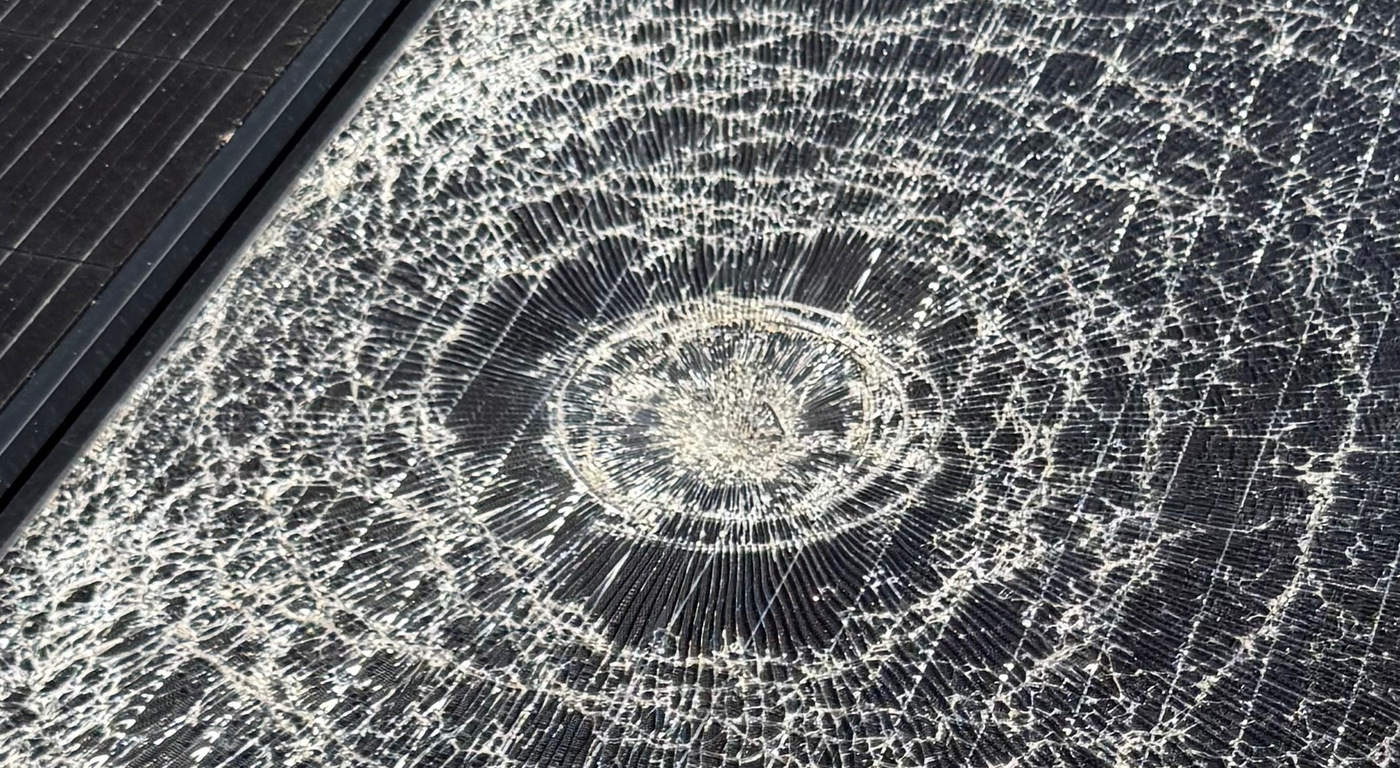
When a hailstone strikes a panel, the damage usually starts at the glass. A direct hit can shatter the tempered glass outright — sometimes in a clean circular impact point with fractures spidering out across the whole panel, like the photo above. That's the dramatic version, and it's easy to spot.
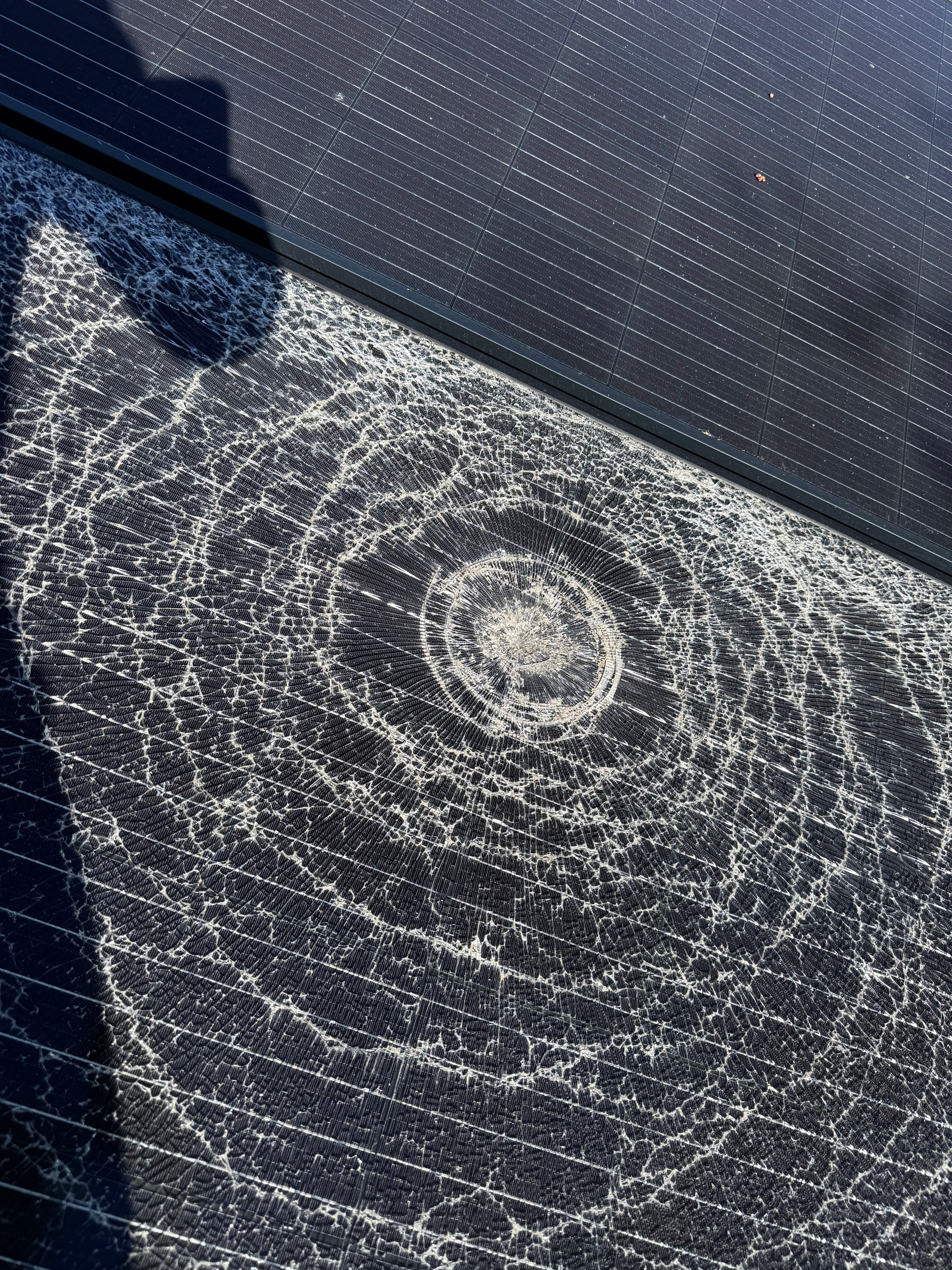
Hail can also damage cells beneath glass that looks intact. Some cracks can affect output or worsen over time, but the impact varies by module and damage. A visual inspection alone cannot rule out hidden cell damage; specialized imaging, including electroluminescence testing, may be needed. Damaged panels can still produce electricity, so continued production does not establish that a system is safe. Stay clear of broken panels and exposed wiring, and contact a qualified solar professional.
What to do after a hailstorm
If a serious storm just rolled through, here's the playbook — in order:
1. Stay off the roof — and don't touch damaged panels or exposed wiring. Wet shingles, broken glass, live DC current, and a steep pitch are a bad combination. Everything in the next steps happens from the ground or from a professional's ladder.
2. Do a ground-level visual check. Binoculars help. You're looking for the obvious: shattered or spiderwebbed glass, panels that look visibly displaced, debris sitting on the array.
3. Note the storm details. Date, time, approximate hail size if you saw it. If your neighbors are filing roof claims, that's relevant context. Write it down while it's fresh.
4. Check your production. Save the storm date, production history and any system alerts from your monitoring app. Lower output can reflect changes in sunlight, temperature, shade or system availability. Ask your solar professional to review those factors before attributing a change to storm damage. A production dip deserves investigation; it does not establish the cause.
5. Get a professional storm documentation visit. A professional assessment can document visible damage and identify where further testing is needed. Ask what the visit includes, what it cannot determine, and whether electrical testing or specialized imaging is appropriate. Keep the findings and photos for your maintenance records and any discussion with your insurer.
Keep clear records for your insurer
Coverage depends on your policy and the facts of the loss. Ask your insurer about notice requirements, exclusions, deductibles and the evidence it needs. Keep the storm date, safely obtained photos, monitoring records and professional findings together. An inspection report can help document observed conditions, but it does not guarantee coverage or establish when every defect occurred. If your system is leased or covered by a power purchase agreement, check the agreement and contact the system owner about maintenance and insurance responsibilities. Keep the records whether or not you make a claim.
What MHSC's storm documentation visit includes
We confirm the inspection and testing scope before the visit. Our report documents the checks performed, the findings and any access or testing limitations, with photos and recommended next steps. Depending on what we find, further electrical assessment or specialized imaging may be needed. We’ll explain what the evidence supports and what remains unresolved before recommending additional work.
Don't wait for the next storm to find out
Colorado gets another hail season every year. The question isn't whether your panels will take another beating — it's whether you'll know the true condition of your system before they do.
If a storm just came through, or if it's been a while since anyone's really looked at your array, book a storm documentation visit. We’ll confirm the scope, document what we find and explain any further checks needed.
Serving homeowners across Denver, Aurora, and the Colorado Front Range.