
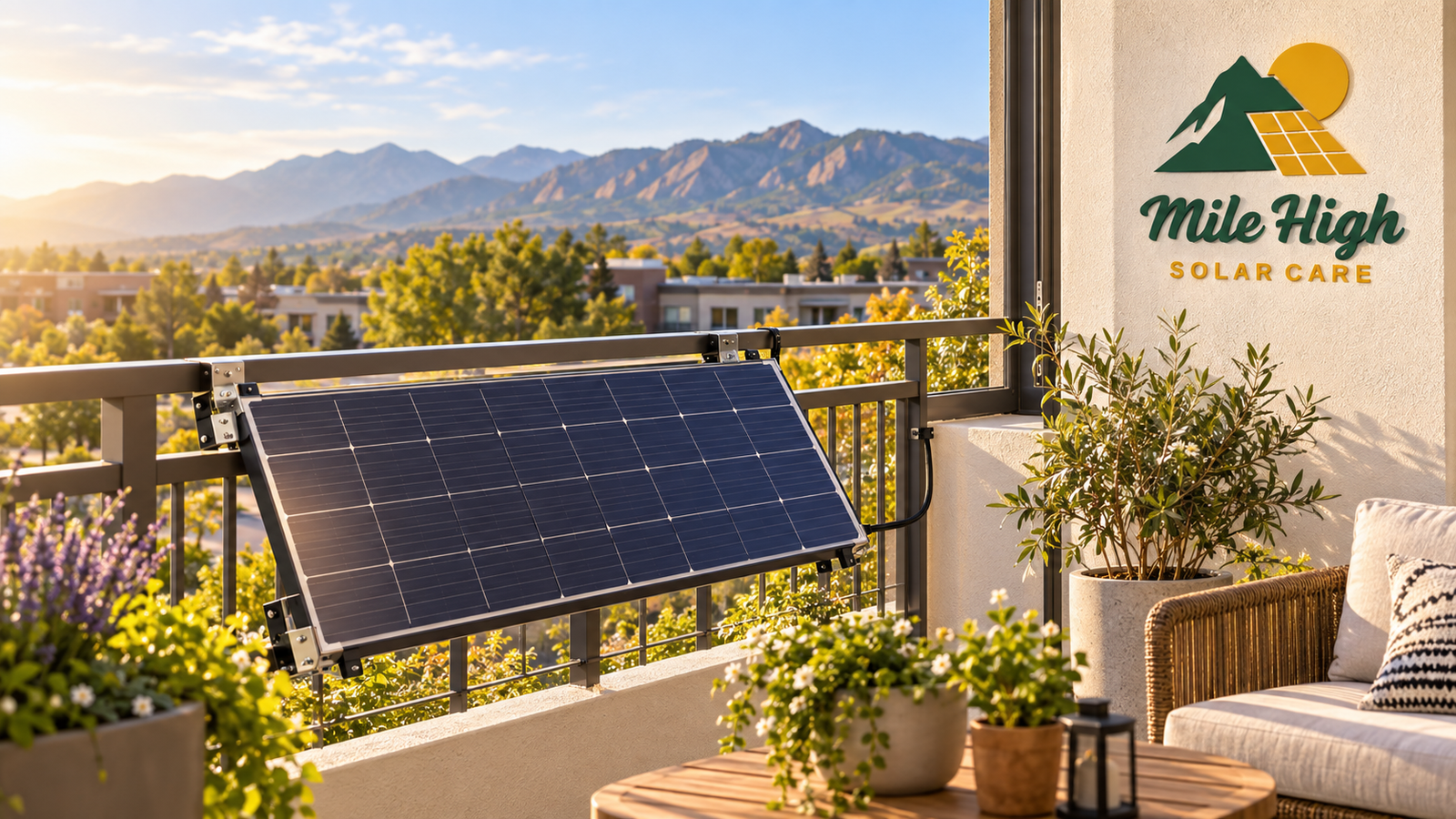
Plug-in solar is having its moment. More states are opening the door to it, and kits selling for a few hundred dollars promise to shave real money off your electric bill with no roof required and no electrician.
Here's the part most sellers won't tell you: as of this month, only three plug-in solar products in the country have earned UL 3700 certification — the safety standard written specifically for this equipment. The three: Hoymiles' HiFlow Pro, APsystems' EZ1, and the Mango Power S. (Re-check the current UL listings before you buy — this list can grow.)
Why the Standard Exists
The standard exists because the hazards are real — fire, shock, and backfeeding the grid during an outage, which puts utility lineworkers at risk.
Where Colorado's Rules Stand
Colorado's HB26-1007 sets rules for plug-in solar devices, including safety listing through a nationally recognized testing laboratory, and the PUC is writing the detailed rules right now (docket 26R-0356E — initial public comments due October 21, hearing November 9). Some products on the market carry only UL 1741 — a different, older inverter standard. That's not the same thing as UL 3700 system certification, and it may not satisfy Colorado's requirements. We're not naming names to attack anyone; we just want you to check the label — the exact model and configuration in the certification record — before you buy.
The good news: this is a solvable problem — the standard exists, the first certified products are here, and the market is catching up.
Before You Buy
If you're thinking about plug-in solar for a balcony, patio, or fence line, talk to someone who knows the standard before you click buy. That's what we're here for — we've been tracking Colorado's rulemaking since day one, and we'll help you read the certification before you spend a dime.
— Jeremy & Meral